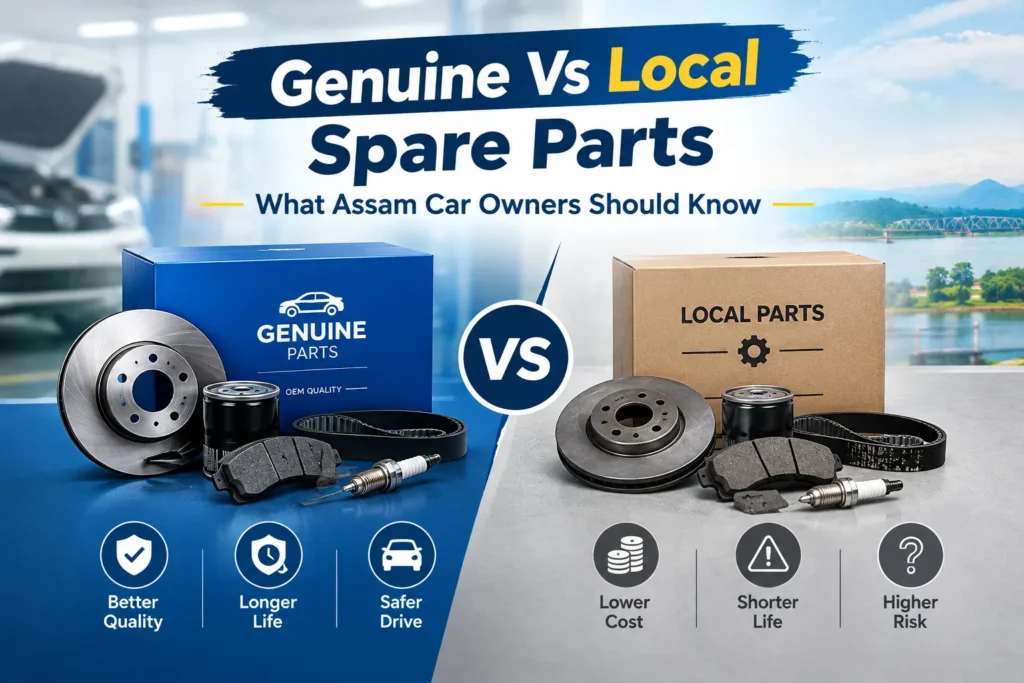
Here’s the short version: a local or unbranded part might save you a few hundred rupees today, but it usually costs you more within two to three years — either through a repeat failure, a part that damages something else around it, or a warranty claim your manufacturer won’t honour because a non-genuine component was fitted. If you’re deciding between a genuine part and a cheaper local alternative, that trade-off is really what you’re weighing, not just the price tag in front of you.
The scale of the problem in India
This isn’t a small or occasional issue. Industry estimates from the Automotive Component Manufacturers Association (ACMA) put counterfeit and spurious components at roughly 36% of India’s auto components aftermarket by volume, according to reporting in Autocar Professional — a figure echoed in separate coverage from Rushlane. That means more than one in three replacement parts sold outside authorised networks in India could be counterfeit, misbranded, or made to a lower spec than the original — filters, brake linings, bearings and lubricants are among the most commonly duplicated items, because they’re cheap to fake and hard for an untrained eye to tell apart from the real thing. It’s a big enough problem that ACMA member companies have run joint raids with law enforcement against counterfeiters, as reported by IndustryWeek.
For car owners in Assam and the wider Northeast, where a lot of servicing still happens through neighbourhood garages rather than authorised centres, this is worth knowing before your next repair — not after a part fails on the highway.
What “genuine” actually means
A genuine or OEM (Original Equipment Manufacturer) part is manufactured to the exact specification the vehicle maker designed for your car — same materials, same tolerances, same testing standards as what came fitted from the factory. When you buy through an authorised distributor, that part usually comes with:
- A manufacturer warranty on the component itself
- A hologram, QR code, or unique part number you can verify
- Documentation that protects your vehicle’s own warranty status
- Consistent quality — the part performs the same way every time, because it’s made to one spec, not whatever the local manufacturer had on hand that week
A local or “compatible” part, by contrast, is usually made by a third party without the OEM’s tooling, testing or quality checks. Some local parts are genuinely fine for low-stress components. Others fail early, fit poorly, or — worse — pass initial inspection but wear out unevenly and damage the parts around them.
Where the real risk shows up
Not every part carries equal risk if it’s non-genuine. Here’s where it matters most:
Brake components. A brake pad that doesn’t meet the OEM’s friction-material spec can mean longer stopping distances or uneven wear on your discs — not something you want to discover mid-monsoon on a wet road.
Filters (oil, air, fuel). A poorly made filter lets contaminants through to your engine. The part itself might cost a few hundred rupees less, but the engine wear it causes over months can run into thousands.
Electrical components and sensors. Non-genuine sensors and electricals are among the hardest to visually distinguish from genuine ones, and among the most likely to cause intermittent faults that are expensive to diagnose later.
Suspension bushes and bearings. Given Assam’s road conditions and monsoon-related wear, using anything less than genuine-spec suspension components tends to shorten replacement intervals significantly.
Lower-risk items — floor mats, some interior trim, certain cosmetic accessories — carry far less downside if you go non-genuine. The real question to ask before every purchase is: does this part affect safety, engine health, or my existing warranty? If yes, genuine is worth the premium.
How to spot the difference before you pay
- Check for a hologram or QR code on the packaging — most major OEMs, including Nissan, Mahindra and Tata Motors, use one of these on genuine parts, and you can usually verify it against the manufacturer’s app or website.
- Match the part number, not just the part’s appearance — counterfeit parts are often built to look identical externally.
- Buy from an authorised distributor or dealership, not a general spare parts market stall, especially for safety-critical components.
- Be wary of prices that seem too good — a genuine part rarely sells for a fraction of its usual cost; a steep discount from an unfamiliar seller is a red flag, not a bargain.
- Ask for a bill with the part number listed — this protects you if the part fails and you need to claim against it.
The real cost, over time
Run the numbers over three years rather than one purchase, and the picture usually flips. A genuine part typically costs more upfront but lasts its full rated life, doesn’t damage adjacent components, and keeps your vehicle’s warranty intact. A cheaper local part might need replacing twice or three times in the same period, and if it causes secondary damage — a filter that lets debris into the engine, for instance — the repair bill dwarfs whatever you saved at the counter.
Frequently asked questions
Does using a non-genuine part void my car’s warranty?
It can, particularly if the failure of a non-genuine part causes damage to another component covered under warranty. Manufacturers can and do decline claims where a non-OEM part is found to be the cause.
Are all local spare parts fake or bad quality?
No — some local manufacturers produce reasonable quality parts for low-risk items. The concern is specifically with safety-critical and engine-critical components, where the spec and testing behind a genuine part matters far more.
Where can I buy genuine spare parts in Guwahati?
Authorised distributors and dealership service centres are the safest source, since they source directly from the manufacturer’s supply chain and can verify authenticity against your vehicle’s make and model.
Source it right the first time
If you’re not sure whether a part you’ve been offered is genuine, it’s worth getting a second opinion before it goes into your vehicle. Binod Group’s authorised distributorship sources OEM-certified spare parts directly from the manufacturer for Mahindra, Tata Motors and other brands we distribute — reach out through our contact page for the exact part your vehicle needs.